

Sustainability · 2025
In this section50 topics
- Sustainability Policy3 items
- Sustainability Goals & UN SDGs3 items
- Policy Review3 items
- Business Value Chain1 item
- Stakeholder Analysis1 item
- Environmental Sustainability — Overview1 item
- Environmental Policy & Guidelines4 items
- Environmental Policy Review3 items
- Energy — Plan & Guidelines3 items
- Energy — Electricity Consumption1 item
- Energy — Fuel Consumption1 item
- Energy — Targets2 items
- Energy — Performance & Outcomes2 items
- Water — Plan & Guidelines3 items
- Water — Withdrawal, Discharge & Consumption1 item
- Water — Targets2 items
- Water — Performance & Outcomes2 items
- Waste — Plan & Guidelines3 items
- Waste — Generation, Disposal & Recycling1 item
- Waste — Targets2 items
- Waste — Performance & Outcomes2 items
- GHG — Plan & Guidelines3 items
- GHG — Emissions1 item
- GHG — Emissions Verification4 items
- GHG — Principles & Standards1 item
- GHG — Targets1 item
- GHG Targets — Other Targets1 item
- GHG — Performance & Outcomes2 items
- Environmental Legal Incidents1 item
- Social Policy & Guidelines4 items
- Social Policy Review3 items
- Social — Principles & Standards Practised1 item
- Human Rights Due Diligence3 items
- Employees — Plan & Guidelines4 items
- Employees — Workforce1 item
- Employees — Remuneration & Provident Fund1 item
- Employees — Training & Development1 item
- Employees — Occupational Health & Safety1 item
- Employees — Labour Relations1 item
- Employees — Employee Representation1 item
- Employees — Targets2 items
- Employees — Performance & Outcomes2 items
- Customers — Plan & Guidelines3 items
- Customers — Satisfaction Results1 item
- Customers — Targets2 items
- Customers — Performance & Outcomes2 items
- Community & Social — Plan & Guidelines3 items
- Community & Social — Targets2 items
- Community & Social — Performance & Outcomes2 items
- Law Violation Incidents1 item
Sustainability Policy
Has a Sustainability Policy
Yes
Policy Description
The company is committed to driving a culture of sustainability in all business operations. It has established policies and goals for sustainability management to serve as guidelines for management that align with the direction of business operations, organizational strategy, relevant laws, and regulations across the three dimensions of sustainability: economic and governance (Governance), social (Social), and environmental (Environment). The company conducts business with integrity, transparency, and fairness under good corporate governance principles, including creating valuable innovative products and services, recognizing the importance of promoting equality and reducing disparities in access to healthcare services, delivering value throughout the supply chain to society, and promoting environmental management. Furthermore, the company's policies are aligned with the United Nations' Sustainable Development Goals (SDGs).
To ensure operations align with the company's commitment to sustainable business practices, the Board of Directors appointed the Corporate Governance and Sustainability Committee. This committee is responsible for setting policies and overseeing good corporate governance, business ethics, anti-corruption, and monitoring sustainability performance (covering governance, social, and environmental aspects). In 2025, the Corporate Governance and Sustainability Committee held two meetings. The company communicated its sustainable management policy and operational framework to all directors, executives, employees, and subsidiaries to serve as a guideline for practices consistent with the company's sustainable management policy and for sustainable growth. Furthermore, the Corporate Governance and Sustainability Committee reviewed the sustainable operations policy and resolved to maintain it as it remains consistent with the company's current operations.
The company has established its sustainable management policy and organizational sustainable development framework as follows:
Corporate Governance and Economy
Committed to conducting business under good corporate governance, with integrity and ethics, to ensure duties are performed with honesty, sincerity, and responsibility towards stakeholders, as well as managing business risks and opportunities.
Supporting the adoption of new technologies in work processes, including medical treatment and various operational processes, to enhance service efficiency and ensure accuracy, precision, and speed in work.
Social
Committed to personnel development to enhance knowledge and capabilities in medical care and services for all company personnel equally, while also creating career advancement opportunities to help drive the organization towards sustainable growth.
Promoting good health for communities and society, providing health education to communities and society, and creating opportunities for underprivileged individuals to build careers to enhance the quality of life for communities and society.
Environmental
Promoting environmental awareness among employees, and seeking new innovations and technologies to reduce resource consumption and improve waste management efficiency, as well as fostering engagement with stakeholders.
In 2025, the company communicated its sustainable management policy and operational framework to all directors, executives, employees, and subsidiaries to serve as a guideline for practices consistent with the company's sustainable management policy and for sustainable growth. Furthermore, the Corporate Governance and Sustainability Committee reviewed the sustainable operations policy and resolved to maintain it as it remains consistent with the company's current operations.
Policy Document Link
https://www.vibhavadi.com/files/ir/corporate-governance/2024-06-06-10-35-531518903531.pdf
Sustainability Goals & UN SDGs
Has Sustainability Goals
Yes
Goals Description
The company sets sustainability strategies and goals to cover all stakeholders, encompassing economic, social, and environmental dimensions, to enhance the quality of life for service users, employees, and partners, as well as to care for the environment for sustainable growth.
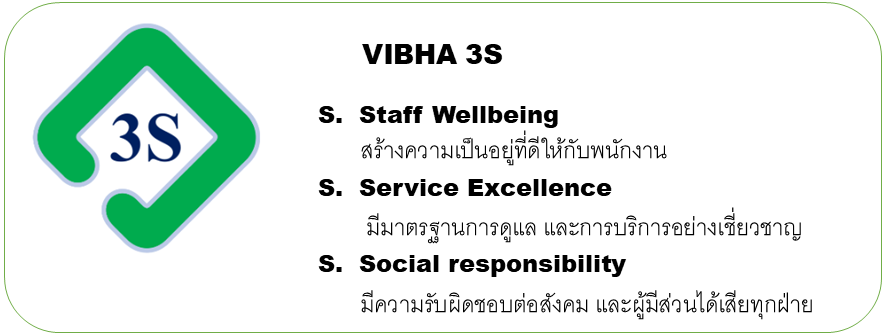
The company has implemented its strategies, resulting in the company receiving an IPD satisfaction assessment score of percent in 2025. 96.33 and OPD 97.05 percent.
The company sets sustainability guidelines and goals to respond to the 13 Sustainable Development Goals (SDGs) of the United Nations.
Economic Sustainability
Key Issues
(3) (8) (9) Quality of Medical and Healthcare Services
(9) Innovation and Technology Creation
(16) (17) Corporate Governance
(16) Confidentiality (IT security, Data Privacy)
(16) Supply Chain Management
(17) Business Partners
Economic Goals
Quality of Medical and Healthcare Services
-
User satisfaction rate of more than 95%.
Corporate Governance
-
Received an excellent CGR (Corporate Governance Report) assessment rating.
Anti-corruption
-
Continuously certified as a member of the Thai Private Sector Collective Action Against Corruption (CAC).
-
No complaints regarding corruption.
Confidentiality (IT security, Data Privacy)
-
Zero data breaches.
Innovation and Technology Development
-
Procurement of efficient medical technology.
Supply Chain Management
-
Key partners acknowledge and sign the Partner Code of Conduct, including anti-corruption.
Business Partner Management
-
Hold joint meetings at least once a year.
Management Approach
-
Promote continuous potential development for doctors and medical personnel.
-
Procure modern and efficient medical equipment for service delivery.
-
Provide patient services according to HA hospital standards.
-
Conduct business under stringent risk management, with transparent and auditable corporate governance.
-
Conduct business in compliance with relevant laws and regulations, and in accordance with the business code of conduct.
-
Implement confidentiality systems (IT security, Data Privacy), personal data protection policies, and define access rights to personal data.
-
Conduct continuous risk assessments annually.
-
Develop potential, service quality, and assess user satisfaction for continuous improvement.
-
Implement innovative medical services and new technologies in service delivery to create business opportunities.
-
Hold joint meetings with affiliated companies or partners to develop services.
Social Sustainability
Key Issues
(3) (4) (5) (8) (10) Organizational and Employee Development
(2) (5) (10) (16) Respect for Human Rights, Equality, and Labor Practices
(3) (11) Occupational Health, Safety, Environment (Health & Safety, Work-life balance)
(3) (11) Community Engagement (Access to medical services and community education)
Social Goals
Organizational and Employee Development
-
Training hours of no less than 8 hours per person.
-
Employee engagement with the organization is over 70%.
Respect for Human Rights, Equality, and Labor Practices
-
Zero human rights violations.
-
The results of the comprehensive Human Rights Due Diligence (HRDD) assessment are at a low-risk level.
Occupational Health, Safety, Environment (Health & Safety, Work-life balance)
-
Zero work-related accident rate.
-
Air quality (PM) measurements are within standard limits.
Community Engagement (Access to medical services and community education)
-
Health education activities for the community and society at least 4 times a year.
-
Health promotion activities for the community at least 4 times a year.
Management Approach
-
Provide training to develop the knowledge and skills of employees, doctors, and medical personnel to enhance operational efficiency.
-
Provide appropriate compensation and benefits, and support career advancement.
-
Create a safe and healthy workplace, and support the quality of life for employees and surrounding communities.
-
Employee engagement with the organization is assessed for development and improvement.
-
Respect human rights, avoid discrimination, and treat labor fairly according to international standards.
-
Organize meetings to provide opportunities for the community to express opinions for development planning.
-
Organize health education and promotion activities for the community and society.
Environmental Sustainability
Key Issues
(12) (15) Waste Management
(12) (13) Energy Management
(6) (12) Water and Wastewater Management
(12) (13) (15) Greenhouse Gas Emission Management
Environmental Dimension Goals
Waste Management
-
Average waste volume per patient-bed-day.
decreased by more than 1% compared to the previous year.
Electricity Consumption
-
Average electricity consumption per patient-bed-day decreased by more than 1% compared to the previous year.
Water and Wastewater Management
-
Average water consumption per patient-bed-day decreased by more than 1% compared to the previous year.
Greenhouse Gas Management
Short-term Goals
-
Reduce Scope 1, 2, and 3 greenhouse gas emissions by more than 2% compared to the previous year.
Long-term Goals
-
Net-zero greenhouse gas emissions by 2065, in line with Thailand's national target.
Management Approach
-
Manage waste separation correctly for each type, including general waste, hazardous waste, infectious waste, and recyclable waste.
-
Establish guidelines and management practices to reduce electricity consumption.
-
Campaign for water conservation.
-
Participate in the "Care the Bear" project to reduce paper consumption.
-
Replace and maintain hospital and office equipment efficiently to save energy and reduce greenhouse gas emissions.
-
Install renewable energy to reduce energy consumption and greenhouse gas emissions.
UN Sustainable Development Goals
| SDG Goal |
|---|
| Goal 3 Good Health and Well-being |
| Goal 4 Quality Education |
| Goal 5 Gender Equality |
| Goal 6 Clean Water and Sanitation |
| Goal 8 Decent Work and Economic Growth |
| Goal 9 Industry, Innovation and Infrastructure |
| Goal 10 Reduce Inequalities |
| Goal 11 Sustainable Cities and Communities |
| Goal 12 Responsible Consumption and Production |
| Goal 13 Climate Action |
| Goal 15 Life on Land |
| Goal 16 Peace, Justice and Strong Institutions |
| Goal 17 Partnerships for the Goals |
Policy Review
Policy Reviewed This Year
Yes
Policy Changed This Year
Yes
Review Details
Changes and Sustainability Performance over the Past Year
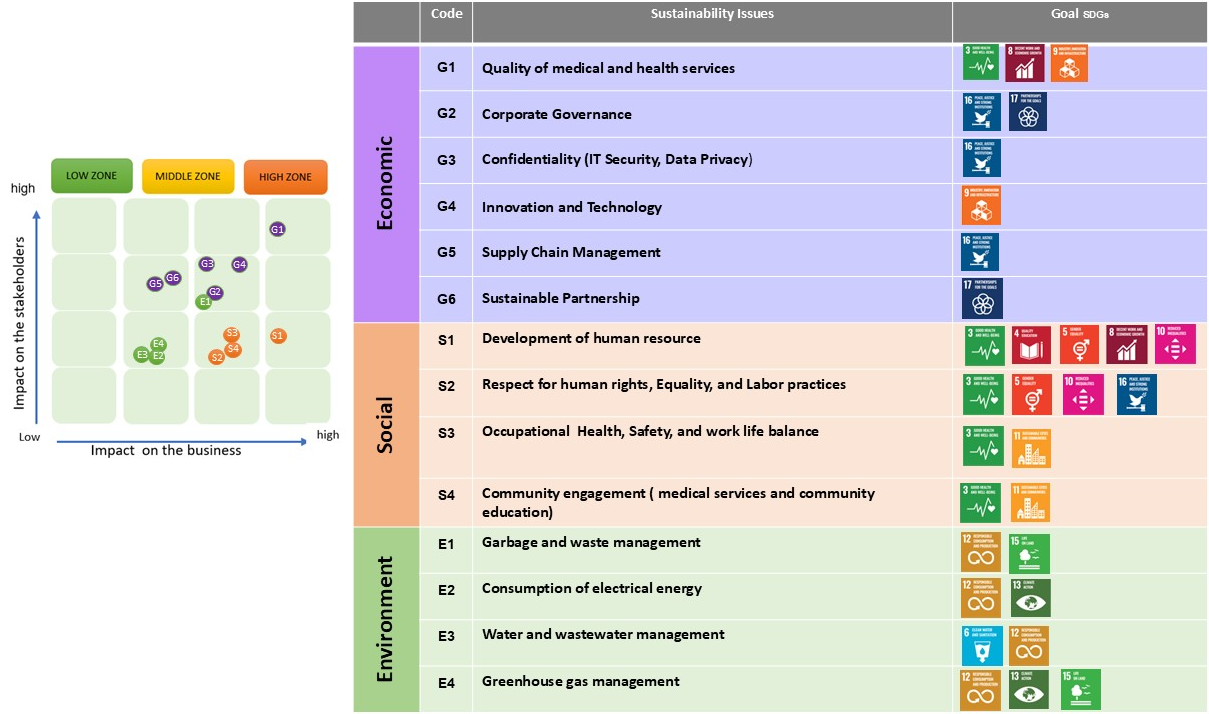
The company reviewed the Charter and the Sustainability Management Policy at the 2nd/2025 meeting of the Governance and Sustainability Committee on December 16, 2025. The Charter of the Governance and Sustainability Committee and the Sustainability Management Policy remain unchanged as they are consistent and appropriate for current operations. Additionally, in 2025, the company reviewed and added economic dimension sustainability issues, which are critical issues affecting stakeholders and the company, including:
(1) Confidentiality (IT security, Data Privacy) As the company operates a hospital business, customer data is crucial and requires robust internal protection and control. Although the company has good protection systems, this remains an important issue that needs continuous attention.
(2) Supply Chain Management The company prioritizes stakeholders in the supply chain and sustainable management, including environmental and social considerations, to ensure continuous sustainability.
(3) Business Partners The company maintains good business partnerships and considers environmental, social, and governance (ESG) factors to foster long-term success.
Furthermore, the company has appointed a Data Protection Officer to oversee the control and storage of personal data of individuals utilizing services at Vibhavadi Hospital.
Channels for Personal Data Complaints
Information Technology Center, Vibhavadi Hospital
51/3 Ngamwongwan Road, Lat Yao Subdistrict, Chatuchak District
Bangkok 10900
Telephone: 02-058-1111
E-mail: dpo@vibhavadi.co.th
In 2024 and 2025, there were no complaints regarding data disclosure, including the rights of personal data owners.
Corporate Governance Issues A robust corporate governance system reflects internal control mechanisms that promote fairness and transparency, considering the best interests of shareholders and responsibilities towards stakeholders. In 2025, the company achieved an "Excellent" CGR assessment score, and the company will continue to develop its corporate governance system.
VIBHA Materiality Matrix 2025
Business Value Chain
Value Chain Description
The Company places importance on stakeholder engagement and fair treatment of stakeholders. The Corporate Governance and Sustainability Committee conducts analysis, identification, and review of relevant stakeholders throughout the business value chain, from upstream to downstream, covering both core and supporting business activities. The information is then analyzed to assess the relationships and impacts—both positive and negative—that stakeholders may experience from the Company’s activities.
Based on the value chain analysis, the Company has established guidelines for managing stakeholder relationships by categorizing stakeholders into two groups as follows:
Internal Stakeholders: employees and management
External Stakeholders: shareholders/investors, customers/service recipients, suppliers, business partners, communities and society, government authorities and regulatory bodies, media, and competitors
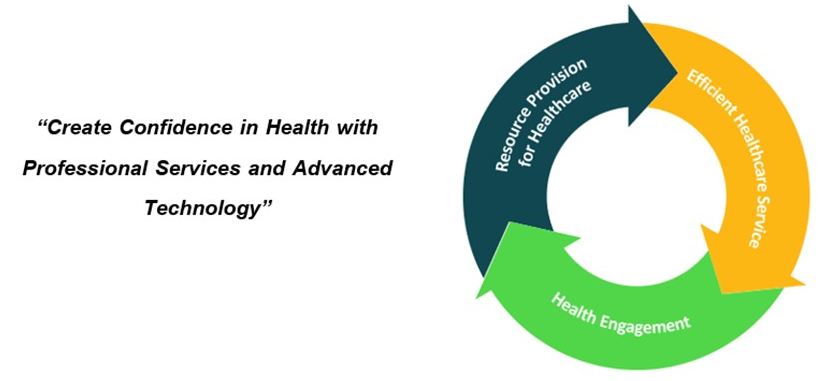
From the analysis of supporting activities, the Company has derived the business value chain as follows:
Stakeholder Analysis
Stakeholder Analysis
| Stakeholder Type | Stakeholders | Stakeholder Expectations | Response to Expectations | Communication Activities |
|---|---|---|---|---|
| Internal stakeholders | 2921 · Description: Employees | - Appropriate Compensation and Benefits, and Good Quality of Life
- Workplace Safety, Career Advancement, and Life Stability
- Healthy and Conducive Work Environment
- Employee Capacity and Skills Development
- Equal Treatment without Discrimination | - Set Compensation and Benefits at Levels Comparable to the Same Industry
- Establish Career Paths
- Encourage Training Both In-House and External, Including Specified Training Hours in Department KPIs
- Human Rights
- Occupational Health and Workplace Safety | 2941 · Description: Online Communication · 2942 · Description: Internal Meeting · 2945 · Description: Complaint Reception · 2947 · Description: Satisfaction Survey |
| External stakeholders | 2913 · Description: Shareholders | - Good Investment Returns
- Good Corporate Governance, Including Anti-Corruption, Transparency, and Accountability
- Accurate, Complete, and Timely Information Disclosure | - Adherence to Good Corporate Governance Principles
- Enhancement of Communication with Shareholders and Investors
- Risk Management and Business Continuity Management | 2941 · Description: Online Communication · 2944 · Description: Annual General Meeting (AGM) · 2949 · Other name: Investor Relations · Description: Others |
| External stakeholders | 2923 · Description: Customers | - Provision of Quality Medical Care in -Accordance with Professional Standards
- Service with Care and a Customer-Oriented Mindset
- Reasonable Service Charges
- Safety of Hospital Premises and Environment
- Protection of Customer Confidential Information
- Equal Treatment without Discrimination | - Develop the Hospital as a Tertiary Care Excellence Center
- Implement Smart Service / Smart Operation / - Smart Hospital Systems to Support Operations
- Procure High-Performance Medical Equipment
- Human Rights
- Compliance with Laws | 2941 · Description: Online Communication · 2945 · Description: Complaint Reception · 2947 · Description: Satisfaction Survey |
| External stakeholders | 2899 · Description: Suppliers | - Business Performance with Integrity, Fairness, and Transparency
- Collaboration in Business Development | - Ethics and Business Conduct
- Collaboration in Anti-Corruption Efforts | 2938 · Description: Visit · 2941 · Description: Online Communication · 2943 · Description: External Meeting |
| External stakeholders | 2900 · Description: Business partners | - Enhancing Competitiveness
- Technical Support
- Collaboration in Service Delivery and Development | - Business Information Disclosure
- Setting Shared Goals
- Learning and Knowledge Sharing to Build Strength | 2938 · Description: Visit · 2943 · Description: External Meeting |
| External stakeholders | 2902 · Description: Community | - Social Assistance and Community Care
- Building Networks to Collaborate in Community and Social Development
- Improving the Quality of Life of Communities and Society | - Continuous Implementation of CSR Activities
- Basic Life Support and CPR Training Programs
- Basic Health Check-up Programs | 2940 · Description: Social Event · 2941 · Description: Online Communication · 2943 · Description: External Meeting · 2945 · Description: Complaint Reception |
| External stakeholders | 2931 · Description: Government agencies and Regulators | - Compliance with Relevant Laws and Regulations
- Transparent Information Disclosure
- Support for Government Initiatives | - Compliance with Relevant Laws and Regulations
- Collaboration in Corporate Social Responsibility (CSR) Activities | 2941 · Description: Online Communication · 2943 · Description: External Meeting |
| External stakeholders | 2929 · Description: Media | - Timely, Complete, and Accurate Information
- Transparency and Truthful Disclosure
- Proper Treatment of the Media | - Corporate Governance
- Anti-Corruption
- Community Engagement and Social Activities | 2939 · Description: Press Release · 2949 · Other name: Special Interview · Description: Others |
| External stakeholders | 2898 · Description: Competitors | - Fair Competition
- Compliance with Laws | - Corporate Governance
- Business Ethics
- Anti-Corruption | 2943 · Description: External Meeting · 2948 · Description: Training / Seminar |
Environmental Sustainability — Overview
Operating Results — Introduction
The Company places importance on quality standards and safety, while being mindful of environmental considerations. The Hospital’s operations include efficient energy management to ensure optimal and cost-effective utilization. Waste management is systematically implemented within the hospital, along with environmental quality control measures. Air quality within the hospital is regularly monitored, and the performance and environmental quality of various facilities—such as operating rooms (OR) and isolation rooms—are assessed to ensure compliance with established standards. These practices are carried out with due consideration for the safety of both service users and personnel within the hospital premises.
Environmental Policy & Guidelines
Has an Environmental Policy
Yes
Policy Description
The Company places great importance on sustainable development by conducting its business with environmental responsibility under the supervision of the Corporate Governance and Sustainability Committee, which oversees corporate governance and sustainability risk management. The Company is committed to minimizing both direct and indirect environmental impacts from its operations for the mutual benefit of its personnel, while demonstrating responsibility toward communities, society, and stakeholders. Key environmental practices are as follows:
Waste Management Focus on reducing waste generation and promoting waste segregation to minimize environmental impacts.
Water Management Promote efficient and economical water usage, with communication across all departments to ensure awareness and implementation.
Energy Management Implement energy-saving initiatives and promote efficient energy use, including the adoption of renewable energy such as the installation of solar panels on building rooftops to reduce greenhouse gas emissions.
Air Quality Management Establish air quality monitoring systems to inform employees and service users, enabling them to prepare and take appropriate health precautions.
Greenhouse Gas Management Take into account greenhouse gas emissions from operations and implement measures to reduce such emissions.
Policy Document Link
https://www.vibhavadi.com/files/ir/corporate-governance/2024-06-26-10-13-01559570991.pdf
Environmental Guidelines
| Guideline |
|---|
| Electricity Management |
| Fuel Management |
| Renewable/Clean Energy Management |
| Water Management |
| Waste Management |
| Greenhouse Gas and Climate Change Management |
| Air Quality Management |
Environmental Policy Review
Policy Reviewed This Year
Yes
Review Details
The Company conducted a review of its environmental policy for 2025 through the Corporate Governance and Sustainability Committee at Meeting No. 2/2025 held on December 16, 2025. The resolution was to maintain the existing policy, as it remains aligned with the Company’s current operations and is consistent with sustainable development principles under the United Nations Sustainable Development Goals (SDGs).
In addition, in 2025, the Company revised the base year for environmental data reporting in categories that compare consumption per service user (water, electricity, and waste). The base year was changed from 2023 to 2024 to ensure that performance comparisons more accurately reflect actual conditions.
The Company recognizes that environmental management presents both risks and opportunities to create a competitive advantage. Therefore, it places importance on fostering environmental responsibility awareness to promote understanding of sustainable development and to embed sustainability as part of the organizational culture, alongside the implementation of relevant environmental activities (further details can be found in Section 3.3.2).
Policies & Guidelines Changed
| Change |
|---|
| Electricity Management |
| Fuel Management |
| Renewable/Clean Energy Management |
| Water Management |
| Waste Management |
| Greenhouse Gas and Climate Change Management |
| Air Quality Management |
Energy — Plan & Guidelines
Has an Energy Management Plan
Yes
Plan Description
The Company recognizes and is committed to maximizing electricity efficiency in order to utilize natural resources effectively, minimize environmental impacts, reduce energy costs for hospital buildings, and strictly comply with the Energy Conservation Promotion Act B.E. 2535 (1992), as amended in B.E. 2550 (2007).
Electricity Consumption Target
The average electricity consumption per patient day is targeted to decrease by more than 1% compared to the previous year.
Action Plans
Reduction of electricity consumption through the use of a tube cleaner for condenser chillers.
Reduction of water pump energy usage during on-peak periods by operating water pumps in Buildings 2, 3, and 4 during 18:00–22:00 daily to minimize on-peak electricity consumption.
Reduction of energy consumption of chilled water pump motors during on-peak periods; the hospital operates three units, with reduced usage during 18:00–06:00.
Employee awareness campaign to promote energy conservation, encouraging staff to turn off lights when not in use.
Maintenance of electrical equipment to ensure efficient operation and energy savings.
Use of clean energy, including the installation of solar panels.
Plan Document Link
https://www.vibhavadi.com/en/ir/operational/environment
Energy — Electricity Consumption
Electricity Consumption
| Metric | Current Year | Previous Year | Two Years Ago |
|---|---|---|---|
| Total electricity consumption within the organization (Kilowatt-Hours) | 13,411,271 | 14,515,827 | 0 |
| Electricity purchased for consumption from non-renewable energy sources (Kilowatt-Hours) | 12,910,560 | 13,998,833 | 0 |
| Electricity purchased or generated for consumption from renewable energy sources (Kilowatt-Hours) | 500,711 | 516,994 | 0 |
Energy — Fuel Consumption
Fuel Consumption
| Metric | Current Year | Previous Year | Two Years Ago |
|---|---|---|---|
| Crude oil (Barrels) | 0 | 0 | 0 |
| Coal (Metric tonnes) | 0 | 0 | 0 |
| Jet fuel (Litres) | 0 | 0 | 0 |
| Diesel (Litres) | 23,593.26 | 27,031.98 | 26,667.3 |
| Gasoline (Litres) | 1,365.58 | 1,765.48 | 1,844.12 |
| Fuel oil (Litres) | 0 | 0 | 0 |
| Natural gas (Standard cubic feet) | 0 | 0 | 0 |
| LPG (Kilograms) | 6,432 | 5,616 | 5,376 |
| Steam (Metric tonnes) | 0 | 0 | 0 |
Energy — Targets
Has Set Targets
Yes
Targets
| Target | Base Year | Base Year Value | Target Year | Target Change (%) | Unit | Per Unit (Intensity) | Per Unit — Please Specify |
|---|---|---|---|---|---|---|---|
| Reduction of electricity purchased for consumption | 2,024 | 11,679,000 | 2,025 | 2 | Kilowatt-hour | Other | Patient Days |
Energy — Performance & Outcomes
Has Performance Results
Yes
Performance Description
The Company has implemented the above-mentioned plans on a continuous annual basis. The results are summarized as follows:
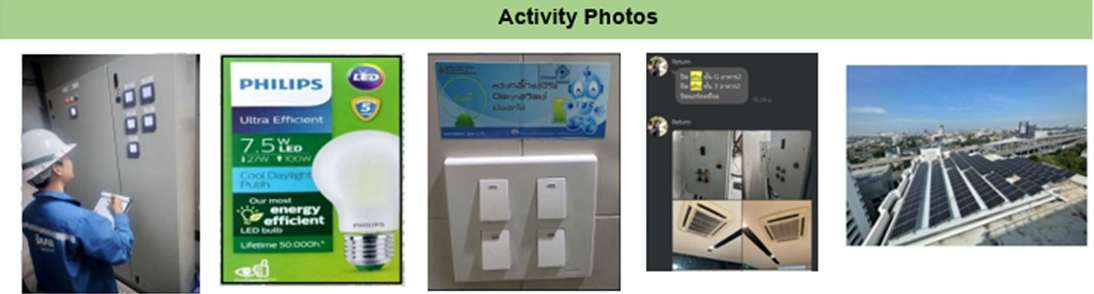
The Company reduced electricity consumption by using a tube cleaner for condenser chillers, specifically for Daikin chillers. Tube cleaning was conducted to remove scale buildup caused by continuous daily operation of the chillers, which are used to supply cooling for the building’s air conditioning system. Such buildup reduces efficiency and increases the approach temperature. Prior to improvement, the chiller consumed a total of 197,470 kWh/year (THB 829,128.86/year). After improvement, consumption decreased to 187,460 kWh/year (THB 787,099.28/year), representing a 5.07% reduction. The total investment was THB 24,000, with a payback period of 0.57 years.
In addition, the Company implemented the same measure for Climaveneta chillers. Prior to improvement, electricity consumption was 353,358.46 kWh/year (THB 1,483,666.66/year). After improvement, consumption decreased to 335,689.90 kWh/year (THB 1,409,480.85/year), representing a 5.00% reduction. The investment was THB 24,000, with a payback period of 0.32 years.
To reduce energy consumption of water pumps during on-peak periods, the Company operated water pumps in Buildings 2, 3, and 4 during 18:00–22:00 daily. This resulted in a reduction of 101,835 kWh/year, equivalent to THB 491,863 per year. This measure has been continuously implemented since 2023.
The Company reduced energy consumption during on-peak periods by optimizing the operation of cooling towers and chillers. The hospital operates three cooling towers and three chillers; during 18:00–06:00, when demand is lower, one unit of each system can be shut down without affecting cooling performance. This resulted in electricity savings of 353,320 kWh/year, equivalent to THB 1,706,536 per year. This measure has also been continuously implemented since 2023.
The Company reduced energy consumption of chilled water pump motors during on-peak periods. Out of three units, one unit can be shut down during 18:00–06:00 without affecting the cooling system. This resulted in electricity savings of 43,800 kWh/year, equivalent to THB 211,554 per year. This measure has been continuously implemented since 2023.
In addition, the Company promotes energy conservation among employees, encouraging them to turn off lights when not in use.
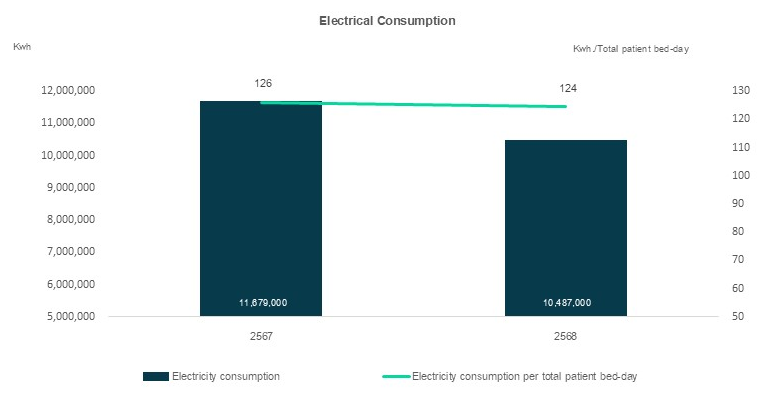
Note: The calculation is based on electricity consumption data from Buildings 1, 2, 3, and 4.
In 2025, the Hospital’s electricity consumption totaled 10,487,000 kWh, representing a decrease of 1,192,000 kWh compared to 11,679,000 kWh in 2024. This reduction was mainly due to a lower bed occupancy rate, which led to decreased electricity usage in line with reduced patient volume.
In addition, the Hospital implemented various initiatives and management approaches to reduce electricity consumption, including campaigns encouraging staff to turn off unnecessary lights and equipment, the use of energy-saving lighting, adjusting air-conditioning temperatures to appropriate levels, and the installation of solar panels as an alternative energy source.
In 2025, the Company was awarded the MEA ENERGY AWARDS 2025 (STANDARD Level), reflecting its commitment to efficient energy use and its efforts to drive the organization toward greater sustainability and environmental friendliness.
Furthermore, the Company has a dedicated department responsible for the maintenance of electrical equipment to ensure efficient operation and energy savings. Management also places importance on adopting renewable energy, including the installation of solar panels across the rooftops of five buildings, with electricity generation as follows:
Years | Electricity Generation from Solar Panels |
2022 | 524,467 kWh |
2023 | 536,104 kWh |
2024 | 516,994 kWh |
2025 | 500,711 kWh |
Water — Plan & Guidelines
Has a Water Management Plan
Yes
Plan Description
The Company has established plans and guidelines for water management as follows:
Water Consumption Target
The average water consumption per patient day is targeted to decrease by more than 1% compared to the previous year.
Action Plans
The Company continues to install automatic faucets in public restrooms throughout the hospital, particularly in areas where installation was previously incomplete, in order to reduce water usage from unattended taps during user activities.
Awareness campaigns are conducted through signage to promote water conservation.
Plan Document Link
https://www.vibhavadi.com/en/ir/operational/environment
Water — Withdrawal, Discharge & Consumption
Water Withdrawal, Discharge & Consumption
| Metric | Current Year | Previous Year | Two Years Ago |
|---|---|---|---|
| Total water withdrawal (Cubic meters) | 163,199 | 176,381 | 192,867 |
| Total water withdrawal by third-party water (Cubic meters) | 163,199 | 176,381 | 192,867 |
| Total water withdrawal by surface water (Cubic meters) | 0 | 0 | 0 |
| Total water withdrawal by groundwater (Cubic meters) | 0 | 0 | 0 |
| Total water withdrawal by seawater (Cubic meters) | 0 | 0 | 0 |
| Total water withdrawal by produced water (Cubic meters) | 0 | 0 | 0 |
| Percentage of wastewater treated before discharge (%) | 100 | 100 | 100 |
| Total water discharge (Cubic meters) | 130,559 | 141,105 | 154,294 |
| Total water discharge to third-party water (Cubic meters) | 130,559 | 141,105 | 154,294 |
| Total water discharge to surface water (Cubic meters) | 0 | 0 | 0 |
| Total water discharge to groundwater (Cubic meters) | 0 | 0 | 0 |
| Total water discharge to seawater (Cubic meters) | 0 | 0 | 0 |
| Total water consumption (Cubic meters) | 32,640 | 35,276 | 38,573 |
| Recycled water (Cubic meters) | 0 | 0 | 0 |
Water — Targets
Has Set Targets
Yes
Targets
| Target | Base Year | Base Year Value | Target Year | Target Change (%) | Unit | Per Unit (Intensity) | Per Unit — Please Specify |
|---|---|---|---|---|---|---|---|
| Reduction of water withdrawal | 2,024 | 176,381 | 2,025 | 1 | Cubic meters | Other | Patient Days |
Water — Performance & Outcomes
Has Performance Results
Yes
Performance Description
The Company has continuously managed wastewater from the previous year by regularly inspecting and maintaining water pumps in the hospital’s central wastewater collection pit. Chlorine is consistently added to disinfect the wastewater, and samples are collected on a monthly basis before discharging into Bangkok’s closed sewer system for treatment at the Din Daeng centralized wastewater treatment plant.
These operations have been conducted in coordination meetings and have undergone design and installation inspections by officials from the Bangkok Metropolitan Administration (BMA). In addition, relevant hospital departments have participated in site visits to study wastewater treatment systems, and the Company monitors treatment performance on a monthly basis by obtaining reports from the BMA. This approach helps reduce the risk of system failure in wastewater treatment.
Water Consumption Reduction
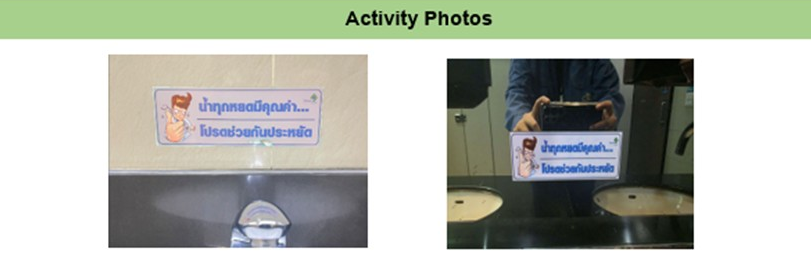
The Company has continued installing automatic water faucets in public restrooms throughout the hospital, particularly in areas where installation was previously incomplete, to reduce unnecessary water usage from unattended taps during user activities. In addition, awareness signage promoting water conservation has been implemented.
Note: The calculation is based on water consumption data from Buildings 1, 2, 3, and 4 (Patient Buildings).
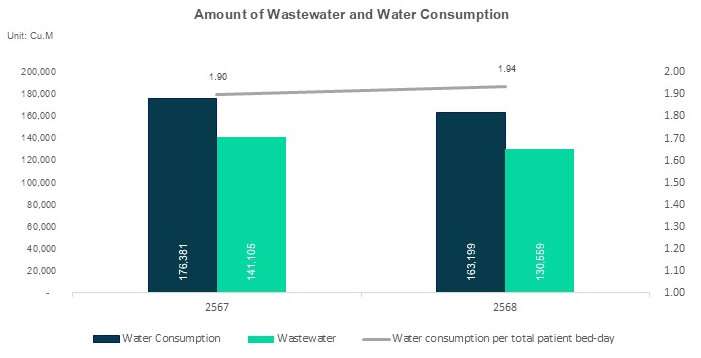
In 2025, the Hospital’s total water consumption decreased by 13,182 cubic meters compared to 2024. However, when calculated on a per patient-day basis, water consumption was 1.94 cubic meters, representing a slight increase of 2.11% compared to 1.90 cubic meters in 2024. Based on the above, the Company will implement measures to improve water management in order to achieve the targets set.
Waste — Plan & Guidelines
Has a Waste Management Plan
Yes
Plan Description
Waste and waste management are critical aspects of hospital operations. The Hospital has established a Waste Management Committee to ensure efficient and proper handling and disposal processes. Regular monitoring is conducted to ensure proper segregation, storage, collection, handling, transportation, and disposal of waste.
Plan Document Link
https://www.vibhavadi.com/en/ir/operational/environment
Waste — Generation, Disposal & Recycling
Waste Generation, Disposal & Recycling
| Metric | Current Year | Previous Year | Two Years Ago |
|---|---|---|---|
| Total waste generated (Kilograms) | 507,749 | 595,759 | 387,581 |
| Non-hazardous waste (Kilograms) | 364,909 | 415,090 | 221,328 |
| Non-hazardous waste - Landfilling (Kilograms) | 364,909 | 415,090 | 221,328 |
| Non-hazardous waste - Incineration (with energy recovery) (Kilograms) | 0 | 0 | 0 |
| Non-hazardous waste - Incineration (without energy recovery) (Kilograms) | 0 | 0 | 0 |
| Non-hazardous waste - Other disposal operations (Kilograms) | 0 | 0 | 0 |
| Hazardous waste (Kilograms) | 142,840 | 180,669 | 166,253 |
| Hazardous waste - Landfilling (Kilograms) | 0 | 0 | 0 |
| Hazardous waste - Incineration (with energy recovery) (Kilograms) | 0 | 0 | 0 |
| Hazardous waste - Incineration (without energy recovery) (Kilograms) | 142,840 | 180,669 | 166,253 |
| Hazardous waste - Other disposal operations (Kilograms) | 0 | 0 | 0 |
| Total reused/recycled waste (Kilograms) | 59,119 | 50,139 | 61,276 |
| Reused/Recycled non-hazardous waste (Kilograms) | 59,119 | 50,139 | 61,276 |
| Reused non-hazardous waste (Kilograms) | 0 | 0 | 0 |
| Recycled non-hazardous waste (Kilograms) | 59,119 | 50,139 | 61,276 |
| Reused/Recycled hazardous waste (Kilograms) | 0 | 0 | 0 |
| Reused hazardous waste (Kilograms) | 0 | 0 | 0 |
| Recycled hazardous waste (Kilograms) | 0 | 0 | 0 |
Waste — Targets
Has Set Targets
Yes
Targets
| Waste Type | Disposal Approach | Target | Base Year | Base Year Value | Target Year | Target Change (%) | Unit | Per Unit (Intensity) | Per Unit — Please Specify |
|---|---|---|---|---|---|---|---|---|---|
| Hazardous waste | 2762 · Description: Incineration without energy recovery | Reduce waste volume | 2,024 | 173,409 | 2,025 | 1 | Kilograms | Other | Patient Days |
Waste — Performance & Outcomes
Has Performance Results
Yes
Performance Description
Performance
Established a waste segregation policy at the source, with clearly defined categories, labeled containers, and color-coded bins, along with training programs on waste separation.
Developed waste, chemical, and hazardous materials management plans, including operational guidelines covering all stages from segregation, storage, collection, transportation, to disposal of all types of hospital waste.
Provided waste carts for careful handling and designated routes and schedules for waste transportation.
Improved waste storage areas for general, infectious, and hazardous waste to meet hygiene standards, and coordinated with external service providers for waste disposal, such as the Bangkok Metropolitan Administration, Krungthep Thanakom Co., Ltd., and Akkhi Prakan Co., Ltd.
Infectious and hazardous waste are disposed of using high-temperature incineration in compliance with the Ministry of Public Health’s regulations on infectious waste disposal (B.E. 2545) and the Bangkok Metropolitan Administration’s regulations on waste and sewage management for buildings and healthcare facilities (B.E. 2545).
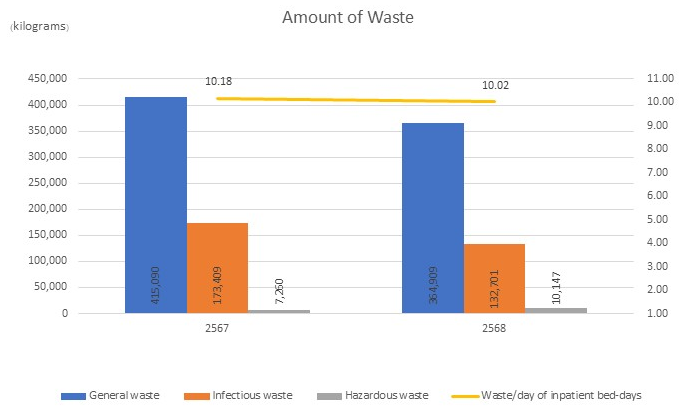
In 2025, the average amount of infectious waste per inpatient was 10.02 kilograms per day, a decrease of 0.16 kilograms per day compared to 10.18 kilograms per day in 2024. This reduction was due to a decrease in the number of patients, which resulted in lower waste generation. The total amount of recyclable waste was 59,119 kilograms, which the Company delivered to recycling facilities. The Company generated revenue of Baht 143,817 from the sale of recyclable waste, which has been reserved for environmental and social activities in 2026.
In addition, the Company organized the “VIBHA GO GREEN” campaign to promote proper waste segregation among patients and hospital personnel, and provided environmental awareness training to new employees during orientation to instill a strong commitment to environmental responsibility.
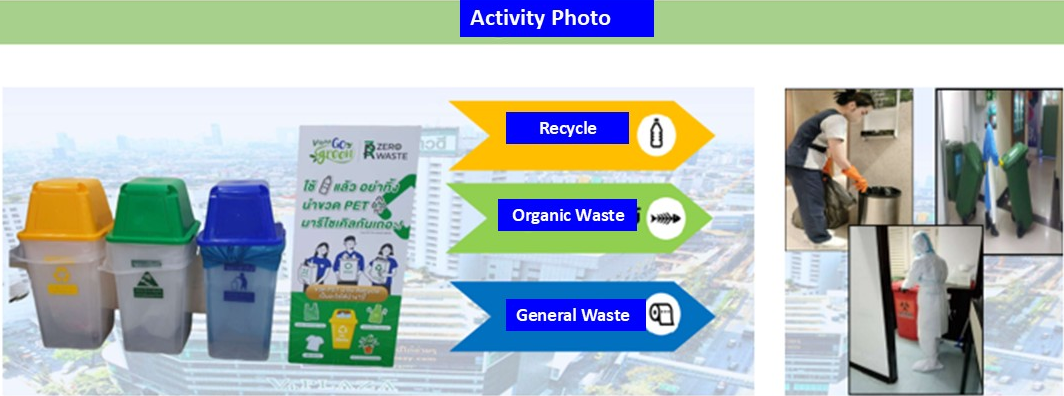
In 2025, the Hospital was certified as achieving the “Excellent” level under the GREEN & CLEAN Hospital Challenge, with the certification valid from 31 May 2025 to 30 May 2027, granted by the Department of Health, Ministry of Public Health.
GHG — Plan & Guidelines
Has a GHG Management Plan
Yes
Plan Description
The Company is committed to reducing greenhouse gas emissions from its internal activities by promoting environmentally friendly behavior among personnel and fostering awareness of sustainable energy use. It also improves operational processes to ensure efficient resource utilization and minimize unnecessary emissions. The Company emphasizes the use of renewable energy through the installation of solar panels on building rooftops to harness solar energy, thereby reducing reliance on fossil fuels and lowering indirect greenhouse gas emissions. In addition, waste is systematically segregated and recycled to maximize resource reuse. Environmental data is also collected to calculate the Company’s greenhouse gas emissions (Carbon Footprint of Organization: CFO), which is then used to support operational planning and drive long-term emission reduction efforts.
The Company recognizes the challenges of global warming and has therefore established guidelines for managing greenhouse gas emissions, with the objective of ensuring effective management and continuous reduction of emissions. Relevant data from various activities—including energy consumption, waste management, and the use of chemicals in operations—are collected to calculate both greenhouse gas emissions and removals. The Company has set targets to continuously reduce its greenhouse gas emissions.
Plan Document Link
https://www.vibhavadi.com/en/ir/operational/environment
GHG — Emissions
GHG Emissions
| Metric | Current Year | Previous Year | Two Years Ago |
|---|---|---|---|
| Total GHG emissions (Metric tonnes of carbon dioxide equivalent) | 10,149 | 11,465 | 12,526 |
| Total greenhouse gas emissions 1 (Metric tonnes of carbon dioxide equivalent) | 3,361 | 3,185 | 4,083 |
| Total greenhouse gas emissions 2 (Metric tonnes of carbon dioxide equivalent) | 4,878 | 6,125 | 5,956 |
| Total greenhouse gas emissions 3 (Metric tonnes of carbon dioxide equivalent) | 1,910 | 2,155 | 2,487 |
GHG — Emissions Verification
Emissions Verified by a Third Party
Yes
Verifying Body
2656
Verifying Body — Please Specify
NPC Safety and Environmental Service Co,. Ltd.
Verification Document Link
https://eonemedia.setlink.set.or.th/report/0295/2025/1774062449526.pdf
GHG — Principles & Standards
Principles & Standards Applied
| Standard |
|---|
| 2671 |
GHG — Targets
Has Set GHG Targets
Yes
GHG Targets — Other Targets
Other GHG Targets
| Emission Scope | Base Year | Base Year Emissions | Near-term Target Year | Near-term Target Change (%) | Long-term Target Year | Long-term Target Change (%) | Target Year | Target Change (%) | Unit | Per Unit (Intensity) | Per Unit — Please Specify |
|---|---|---|---|---|---|---|---|---|---|---|---|
| 2716 | 2,024 | 12,456 | 2,025 | 2 | 2,065 | 100 | 2,025 | 2 | Metric tonnes of carbon dioxide equivalent | Other | Base Year |
GHG — Performance & Outcomes
Has Performance Results
Yes
Performance Description
The Company has commenced a rigorous measurement of its greenhouse gas emissions by establishing a working team to collect data and implement measures and activities aimed at reducing emissions. In early 2025, the Company officially applied to participate in the Organizational Carbon Footprint Platform testing project to move toward Net Zero, organized by the Thailand Greenhouse Gas Management Organization (Public Organization).
Performance in 2025
The Company measured its greenhouse gas emissions, including direct emissions from combustion (Scope 1), indirect emissions from energy consumption (Scope 2), and other indirect emissions (Scope 3). The results are as follows:
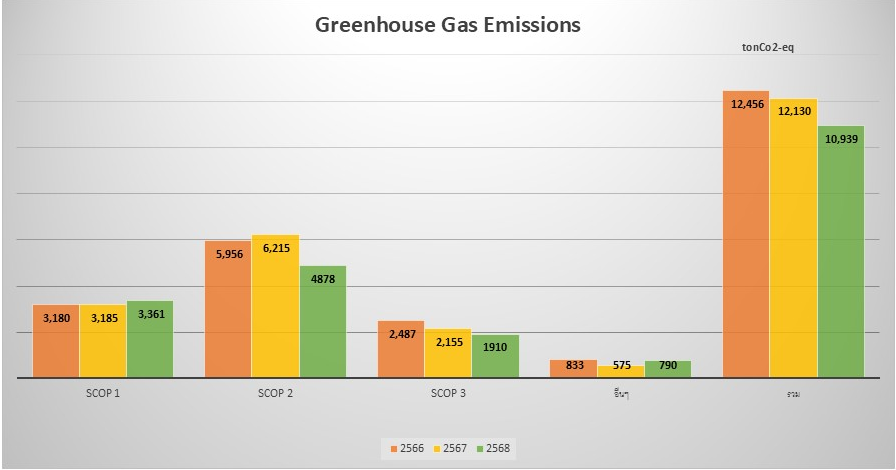
Based on the Company’s performance in 2025, compared to the short-term target of reducing greenhouse gas emissions by 2% (compared to 2024), the Company achieved a reduction of 13.05%, as detailed in the table above. The Company remains committed to improving its operational systems to achieve the targets set.
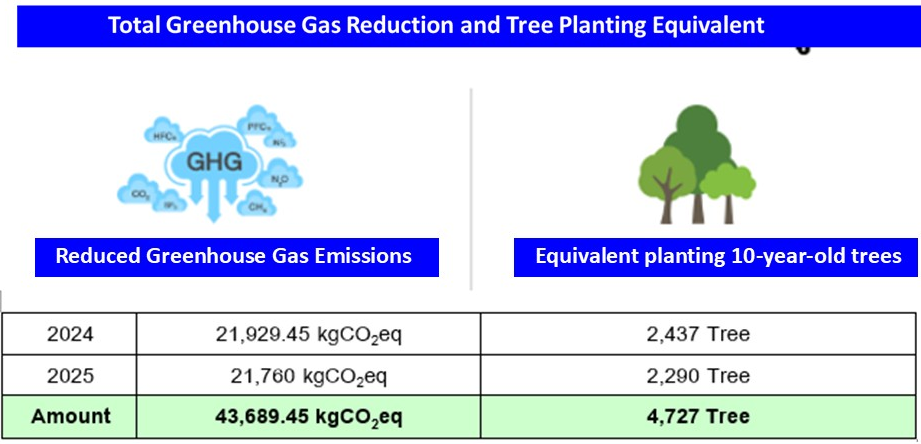
In addition, the Company participated in the “Care the Bear” project, which focuses on adjusting organizational behavior to reduce greenhouse gas emissions from events and activities. In 2025, the Company reduced paper usage in its activities, resulting in a reduction of greenhouse gas emissions as follows:
In 2025, the Company received a SET ESG Ratings assessment of “A” from the Stock Exchange of Thailand, reflecting its strong commitment to sustainable business practices. The Company will continue to enhance its performance toward achieving higher ratings, as evidenced by the improvement from a “BBB” rating in 2024.
Environmental Legal Incidents
Legal Violation Incidents
| Metric | Current Year | Previous Year | Two Years Ago |
|---|---|---|---|
| Number of cases or incidents of legal violations or negative environmental impact (cases) | 0 | 0 | 0 |
Employees — Plan & Guidelines
Has an Employee Management Plan
Yes
Plan Description
Organizational and Employee Development
Employees are considered a vital human resource for driving business, achieving goals, and leading to the organization's sustainable success. Therefore, the care and development of human resources are essential, requiring promotion of both knowledge and skills, as well as efficient performance. The company continuously promotes personnel development, covering medical personnel, employees, directors, and executives, while also providing welfare benefits to all employees and fostering job and family security for employees. Details are presented in the Corporate Governance section, under the heading "Information on Employees" and under the heading "Recruitment, Development, and Performance Evaluation of the Board of Directors."
Occupational Health and Safety
The company prioritizes the health, safety, and working environment of all employees within the organization to prevent hazards, reduce, and control risks in all work processes and business operations that could lead to loss of life, injury, or illness resulting from working conditions. The company has established an Occupational Health, Safety, and Environmental policy in compliance with laws, including having a management system that adheres to international standards, regulations, and various related requirements, to prevent and reduce occupational hazards.
Occupational health and safety is one of the crucial issues related to the health of medical personnel, employees, and stakeholders of the organization, as well as potentially impacting business operations. Therefore, the company recognizes and prioritizes occupational health and safety to foster a positive work culture and environment, and to build confidence among all relevant stakeholders. This is achieved by adhering to national healthcare service standards (Hospital Accreditation: HA) and complying with laws. Furthermore, the company has established an occupational health and safety policy, which essentially serves as a framework for the company's operations concerning safety, occupational health, and the working environment, and designates it as the responsibility of all personnel in their duties.
Plan Document Link
https://www.vibhavadi.com/en/ir/operational/society
Plan Areas
| Plan Area |
|---|
| Fair employee compensation |
| Employee training and development |
| Promoting employee relations and participation |
| Migrant/foreign labor |
| Child labor |
| Occupational health and safety in workplace |
Employees — Workforce
Workforce Data
| Metric | Current Year | Previous Year | Two Years Ago |
|---|---|---|---|
| Total number of employees (Persons) | 1,367 | 1,309 | 1,287 |
| Number of male employees (Persons) | 189 | 178 | 181 |
| Number of female employees (Persons) | 1,178 | 1,131 | 1,106 |
| Total employment of disabled persons (people) | 6 | 4 | 3 |
| Total disabled employees (people) | |||
| Total male disabled employees (people) | |||
| Total female disabled employees (people) | |||
| Total disabled workers who are non-employee (people) | |||
| Contributions to the fund for promoting and improving the quality of life for disabled persons | |||
| Total number of male employees in operational level (Persons) | |||
| Total number of male employees in management level (Persons) | |||
| Total number of male employees in executive level (Persons) | |||
| Total number of female employees in operational level (Persons) | |||
| Total number of female employees in management level (Persons) | |||
| Total number of female employees in executive level (Persons) |
Employees — Remuneration & Provident Fund
Remuneration & Provident Fund
| Metric | Current Year | Previous Year | Two Years Ago |
|---|---|---|---|
| Total disabled employees (people) | 594,870,000 | 585,182,211.31 | 572,636,774.18 |
| Total male employee remuneration (Baht) | |||
| Total female employee remuneration (Baht) | |||
| Number of employees eligible to participate in PVD (persons) | 1,367 | 1,309 | 1,287 |
| Total number of employees joining employee provident fund (Persons) | 705 | 710 | 708 |
| Percentage of total number of employees joining employee provident fund to total number of employees (%) | 51.57 | 54.24 | 55.01 |
| Number of PVD members / Total eligible employees (%) | 51.57 | 54.24 | 55.01 |
| Total amount of provident fund contributed by the Company (Baht) | |||
| Total amount of provident fund contributed by employee (baht) |
Employees — Training & Development
Training Data
| Metric | Current Year | Previous Year | Two Years Ago |
|---|---|---|---|
| Average employee training hours (Hours / Person / Year) | 17.61 | 13 | 20.7 |
| Employee development and training expenses (baht) | 2,402,400 | 1,324,752 | 1,026,966 |
Employees — Occupational Health & Safety
Occupational Health & Safety Data
| Metric | Current Year | Previous Year | Two Years Ago |
|---|---|---|---|
| Total number of lost time injury incidents by employees (Cases) | 12 | 14 | 13 |
Employees — Labour Relations
Labour Relations Data
| Metric | Current Year | Previous Year | Two Years Ago |
|---|---|---|---|
| Total voluntary resignations (Persons) | 156 | 233 | 202 |
| Male employees who voluntary resigned (Persons) | |||
| Female employees who voluntary resigned (Persons) | |||
| Percentage of employee turnover leaving the Company voluntarily (%) | 11.41 | 17.8 | 15.7 |
| Evaluation result of employee engagement | 1 | 0 | 1 |
Employees — Employee Representation
Employees Are Represented Collectively
No
Employees — Targets
Has Set Employee Targets
Yes
Targets
| Indicator | Target Areas | Base Year | Base Year — Description | Target Year | Target Year — Description |
|---|---|---|---|---|---|
| Employee Training Hours | 2984 · Description: Employee training and development | 2,024 | Not less than 8 hours of training per person per year. | 2,025 | Not less than 8 hours of training per person per year. |
Employees — Performance & Outcomes
Has Performance Results
Yes
Performance Description
Employee training.
The company established a Development and Training Department to oversee employee training. This department is responsible for developing training plans, surveying employee training needs, and sourcing external courses to align with the objectives and professional requirements of employees in each department. Furthermore, satisfaction and feedback from training sessions are measured to collect data and utilize it for employee development. In 2025, the company organized the following training programs:
Pre-employment training.
Training for performance development based on training needs.
Training for career advancement.
Mandatory training according to standards / organizational policy.
Operational Performance in 2025.
The Development and Training Department organized both internal and external training for employees to enhance their skills and knowledge. In 2025, 4,058 employees received training (counted by training topic), an increase of 1,823 employees compared to 2,235 employees in 2024, demonstrating a continuous commitment to personnel development. Details are as follows:
The company organized a total of 230 internal and external training courses.
The number of employees who received training was 4,058, equivalent to 17.61 hours/person/year.
Employee development expenses amounted to 2,402,400 Baht.
Employee engagement.
The company fosters an organizational culture rooted in executives and supervisors acting as role models, promoting open communication, focusing on positive outcomes, empowering employees, and building engagement by treating employees sincerely, adhering to ethical principles, and fostering a sense of family.
In 2025. The company implemented projects. “HAPPINOMETER” is an employee engagement survey that gathers feedback from employees to develop or support various aspects, including knowledge development, Work-Life Balance, health, family, and welfare. The employee engagement survey result was 70.34% (target: greater than 70%).
Customers — Plan & Guidelines
Has a Customer Management Plan
No
Plan Description
The company is committed to consistently communicating and fostering understanding between the organization and all stakeholder groups, by adhering to the principles of accurate, transparent, and timely information disclosure, to ensure that stakeholders receive appropriate and complete information. Such information disclosure is carried out as appropriate and in accordance with the company's policies, with strategies and communication channels established to address the needs of each group, including discussions, opinion surveys, and communication through social media, press releases, documents, and annual reports.
The company provides opportunities for stakeholders to participate in issues that may affect their groups, by establishing channels for receiving feedback, suggestions, and complaints through processes aligned with the whistleblowing and complaint policy. The stakeholder engagement policy specifies the responsibility for establishing a fair and efficient system for receiving and responding to complaints. Furthermore, the company prioritizes the protection of personal data of customers and patients through stringent and secure measures, to develop services that meet needs and create maximum satisfaction, which is a crucial foundation for sustainable business operations and social responsibility.
Plan Areas
| Plan Area |
|---|
| Responsible production and services for customers |
| Development of customer satisfaction and customer relationship |
| Protection of customer personal information |
Customers — Satisfaction Results
Customer Satisfaction Results
| Metric | Current Year | Previous Year | Two Years Ago |
|---|---|---|---|
| Evaluation results of customer satisfaction | 1 | 1 | 1 |
Customers — Targets
Has Set Customer Targets
Yes
Targets
| Indicator | Target Areas | Base Year | Base Year — Description | Target Year | Target Year — Description |
|---|---|---|---|---|---|
| User Satisfaction | 3009 · Description: Development of customer satisfaction and customer relationship | 2,024 | User Satisfaction
- IPD service users: 95%
- OPD service users: 95% | 2,025 | User Satisfaction
- Inpatient service users: 97%
- Outpatient service users: 96% |
Customers — Performance & Outcomes
Has Performance Results
Yes
Performance Description
Operations
In 2025, the company continuously developed its customer relationship management system, focusing on enhancing user satisfaction and trust through the disclosure of accurate, transparent, and timely information, leading to long-term customer retention.
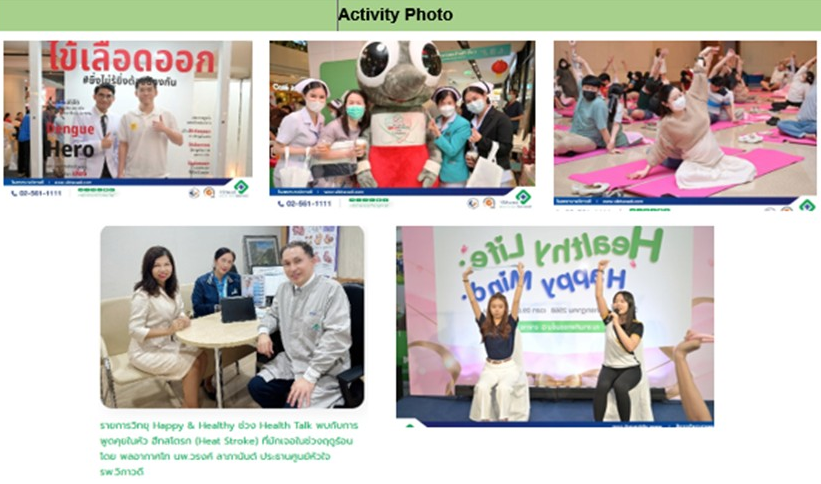
In addition, network hospitals have continuously organized activities and projects that promote access to quality healthcare services, such as the 3rd 'How to Healthy Mom & Smart Baby' activity, which provides mothers and fathers with practical experience in childcare and proper postpartum recovery for mothers, and mobile medical units dispatched to remote areas to ensure patients can access medical services. Furthermore, there are Other educational activities and channels include activities Live broadcasts, knowledge sharing via Facebook, Line official, and the company also provides health articles that interested individuals can access through the company's website. https://www.vibhavadi.com/th/podcast
Customer satisfaction assessment results
Item | Target (%) | Year 2023 (%) | Year 2024 (%) | Year 2025 (%) |
Inpatient satisfaction (IPD) | 96 | 92 | 96 | 96.33 |
Outpatient satisfaction (OPD) | 97 | 95 | 97 | 97.05 |
Feedback from service users has been continuously used by the company to improve and develop service quality, as evidenced by increasing satisfaction scores each year. Additionally, the company has published patient testimonials regarding their positive experiences receiving treatment at Vibhavadi Hospital through the company's website. https://www.vibhavadi.com/th/patient-stories
Community & Social — Plan & Guidelines
Has a Community & Social Plan
Yes
Plan Description
The company conducts its business with responsibility towards communities and society, prioritizing adherence to appropriate and proper safety, security, and hygiene standards, while also considering the impact on natural resources and the environment. The practices adopted by the company include continuously promoting awareness of social and environmental responsibility among employees, as well as regularly allocating a portion of its profits to support activities that benefit society and the environment. This approach helps prevent business operations from negatively impacting the quality of life of the public and the environment.
In addition, the company cooperates and strictly controls its operations in accordance with the laws and regulations of relevant regulatory bodies, focusing on the sustainable development of society, communities, and the environment, while also supporting the creation and conservation of natural resources. Furthermore, it prioritizes promoting education for youth and supporting public benefit activities in underprivileged communities to build strong and self-reliant communities in the long term.
Plan Areas
| Plan Area |
|---|
| Employment and professional skill development |
| Education |
| Religion and culture |
| Forests and natural resources |
| Sports and recreation |
| Occupational health, safety, health, and quality of life |
| Disadvantaged and vulnerable groups |
| Water and sanitation management |
| Reducing inequality and promoting social equality |
Community & Social — Targets
Has Set Community & Social Targets
Yes
Targets
| Indicator | Target Areas | Base Year | Base Year — Description | Target Year | Target Year — Description |
|---|---|---|---|---|---|
| Complaints from the community | 3045 · Other name: Community complaints are zero · Description: Others | 2,024 | Community complaints are zero | 2,025 | Community complaints are zero |
Community & Social — Performance & Outcomes
Has Performance Results
Yes
Performance Description
Operations
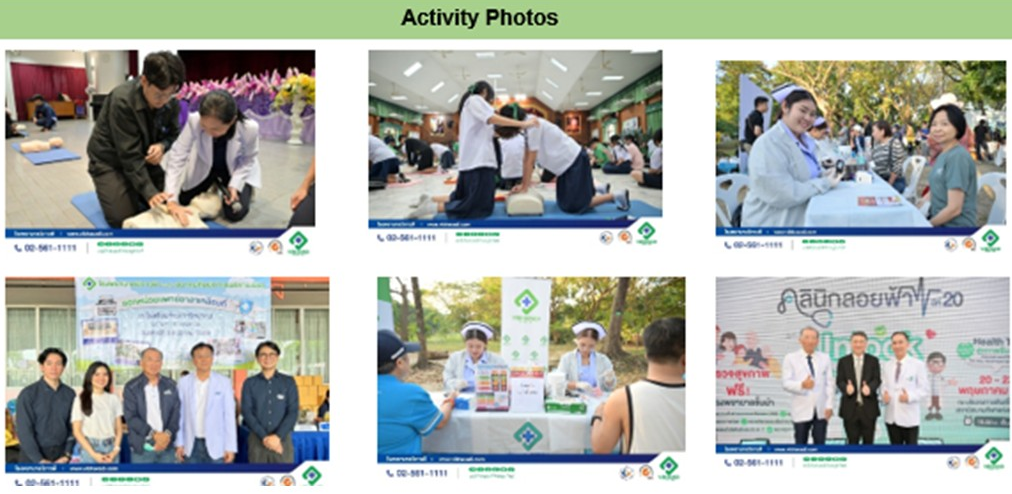
The company has established a unit responsible for coordinating with various agencies, including district offices, municipalities, communities, and other organizations. This unit participates in meetings and gathers feedback from these agencies. The company also organizes activities to promote self-health assessment access for the general public, provides appropriate self-care advice, and conducts medical knowledge and treatment training by specialized medical teams for the general public, government agencies, patients, and patient relatives, both in-person and online. Activity details can be viewed on the company's website. https://www.vibhavadi.com/th/news
| to reduce crises and losses. In 2025, there will be 6 free training sessions, marking the 26th year of organization. |
| Training was provided to various agencies, including faculty and staff of Kasetsart University Laboratory School on December 11, 2025. |
| The hospital collaborated with a genuine bird's nest brand to organize free health check-up activities for exercisers at Suan Rot Fai Park on December 1. 2025 |
| Date 8/12/2025 Vibhavadi Hospital, in collaboration with St. Gabriel's Alumni Association, organized a mobile volunteer medical unit activity at Thamaka School, Thamaka District, Kanchanaburi Province. |
The hospital held a meeting to solicit opinions for developing an annual plan for community health support, disease prevention, and clinical services. 2025 on April 22, 2025 | |
| Available on the company's website https://www.vibhavadi.com/th/blogs |
Law Violation Incidents
Law Violation Incidents
| Metric | Current Year | Previous Year | Two Years Ago |
|---|---|---|---|
| The total number of cases or incidents of significant violations of laws or regulations regarding social and human rights (Cases) | 0 | 0 | 0 |
| The total number of cases or incidents that cause significant labor disputes (Cases) | 0 | 0 | 0 |
| The total number of cases or complaints related to consumer rights violations (Cases) | 0 | 0 | 0 |
| The total number of cases or complaints related to partner rights violations (Cases) | 0 | 0 | 0 |
| The total number of cases or incidents that cause disputes with the community/society (Cases) | 0 | 0 | 0 |
| The total number of cases or incidents related to cyber security or customer data breaches (Cases) | 0 | 0 | 0 |
| The total number of cases or incidents related to safety and occupational health at work (Cases) | 0 | 0 | 0 |